
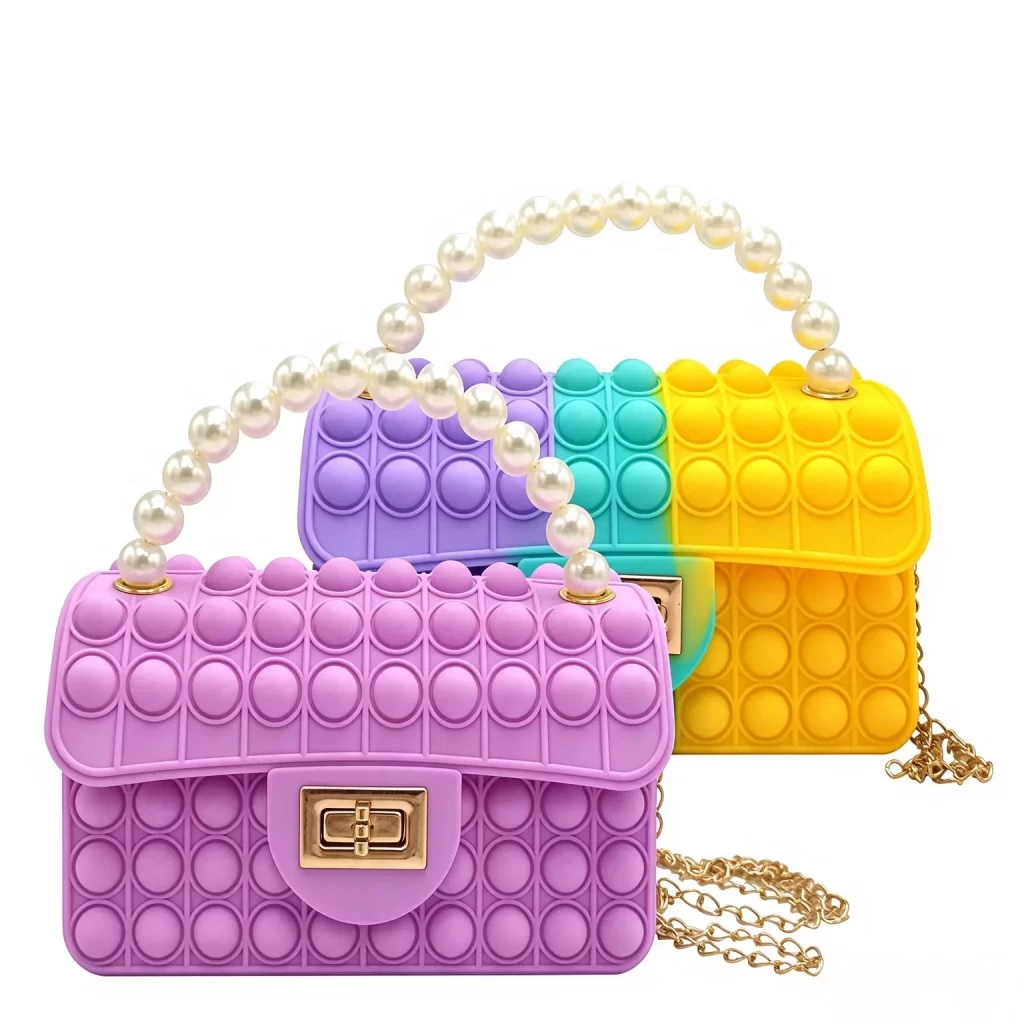
A silicone bag is a branding surface that gets touched, squeezed, washed and carried every day. That is exactly why the logo method matters more on silicone than on almost any other promotional product: silicone has a naturally low-energy, non-stick surface, so ordinary inks do not bond to it the way they bond to plastic or fabric. Choose the wrong process and your logo will crack, peel or fade within months. Choose the right one and it will outlast the bag itself.
This guide compares the five logo methods used on custom silicone bags — silk screen printing, pad printing, heat transfer printing, laser engraving and molded-in (embossed/debossed) logos — so you can match the process to your budget, your artwork and how the bag will actually be used. It applies to the whole silicone bag family: the silicone toiletry bag, the silicone cosmetic bag (often sold as a silicone makeup bag), the custom silicone pouch, the coin purse and the silicone handbag.
Why Silicone Is Different from Other Materials
Three properties of silicone drive every decision in this article:
1. Low surface energy. Silicone repels most inks. Durable printing requires silicone-specific inks and, for some processes, surface treatment or a primer. A factory that prints silicone daily handles this routinely; a general print shop often cannot.
2. Flexibility. A silicone bag bends every time it is opened, squeezed or packed — silicone bags for travel may be folded flat into a suitcase corner and expected to spring back. Any surface print must flex with the material without cracking — this rules out many standard inks and favors silicone-based inks and engraved or molded logos for high-flex areas.
3. Heat and wash resistance. Silicone itself tolerates boiling water, dishwashers and high temperatures, but a printed logo may not. If the bag will be washed often, the logo process — not the bag — is the weak point.
The 5 Logo Methods, One by One
1. Silk Screen Printing — the default choice
Silk screen printing pushes silicone ink through a mesh stencil onto the flat surface of the bag, one color at a time.
- Best for: bold single-color or few-color logos, text, simple graphics
- Color: spot colors, matched to Pantone; each color needs its own screen
- Durability: very good with proper silicone ink — resists rubbing and washing; can eventually wear on sharp fold lines
- Cost: low setup per color, very low unit cost at volume — the most economical printed option
- Limits: fine gradients and photo images are not practical; printing area must be reasonably flat, so it suits the front panel of a silicone zipper bag better than a curved or textured surface
For most promotional and retail silicone bags, silk screen is the starting point: clean, sharp and cheap at scale.
2. Pad Printing — for small, curved or detailed areas
Pad printing uses a soft silicone pad to pick ink up from an etched plate and stamp it onto the product. Because the pad is flexible, it can print on curved, recessed or textured surfaces where a screen cannot reach.
- Best for: small logos, fine lines, text on curved areas — zipper pulls, corners, the narrow panels of a silicone pouch for cosmetics
- Color: one color per pass; multi-color possible with careful registration
- Durability: good; the ink layer is thinner than screen printing, so heavy abrasion wears it sooner
- Cost: moderate setup, low-to-moderate unit cost
- Limits: print area is small; not suitable for large graphics
If your logo must sit on the curved body of a silicone handbag rather than a flat panel, pad printing is usually the answer.
3. Heat Transfer Printing — for full-color artwork
Heat transfer printing first prints your artwork — including photos and gradients — onto a transfer film, then applies it to the bag with heat and pressure.
- Best for: full-color designs, photographs, gradient artwork, complex illustrations
- Color: unlimited, full CMYK
- Durability: the weakest of the five for high-flex, high-wash use; the transferred film can crack or lift over time if the bag is bent sharply or washed hot and often
- Cost: higher unit cost than screen printing; setup is moderate
- Limits: best kept to flatter areas and products that will not be folded hard every day
Choose heat transfer when the artwork itself is the point — for example a licensed illustration on a Pop It silicone pouch — and accept a shorter print life as the trade-off.
4. Laser Engraving — the premium, permanent mark
A laser burns the logo into the surface of the silicone itself. There is no ink at all: the mark is a shallow etched recess in the material.
- Best for: premium brands, subtle tone-on-tone logos, products that will be washed constantly
- Color: no color — the result is a slightly darker or lighter tone of the bag’s own color
- Durability: permanent. It cannot peel, crack or wash off, because it is part of the product
- Cost: no plates or screens, so setup is low; unit cost depends on engraving area and time
- Limits: no color reproduction; fine detail is good, but large filled areas are slow and costly
Laser engraving is the right answer when the brand should feel understated and the product will live in a bathroom or gym bag for years.
5. Molded-In Logo (Embossing / Debossing) — built into the mold
Here the logo is part of the mold itself: every bag comes out of production with the logo raised (embossed) or recessed (debossed) in the silicone. A color fill can be added into a debossed logo afterwards if contrast is needed.
- Best for: private-label and long-term product lines, brands that will reorder the same design for years
- Color: same color as the bag by default; optional color fill for contrast
- Durability: permanent — identical to laser engraving in lifespan, with a tactile 3D feel
- Cost: requires modifying or making a mold, so the upfront tooling cost is the highest of the five; the per-unit cost afterwards is near zero
- Limits: only economical for stable designs and larger volumes; changing the logo means changing the mold
If you are building your own product line rather than running a one-off campaign, molded-in is usually the smartest long-term money.
Side-by-Side Comparison
| Method | Colors | Durability | Setup cost | Unit cost | Best use case |
|---|---|---|---|---|---|
| Silk screen | Spot colors, per-color screens | High | Low per color | Lowest at volume | Bold logos on flat panels, promotions, retail |
| Pad printing | 1 color per pass | Medium–high | Moderate | Low–moderate | Small or curved areas, fine detail |
| Heat transfer | Full color (CMYK) | Lowest of the five | Moderate | Higher | Photos, gradients, illustrated designs |
| Laser engraving | None (tone-on-tone) | Permanent | Low | Moderate | Premium feel, heavy-wash products |
| Molded-in | Bag color (+optional fill) | Permanent | Highest (tooling) | Near zero | Long-term private label lines |
How to Choose: Match the Method to the Job
- Sourcing wholesale silicone bags for a trade-show giveaway — thousands of units, one-color logo: silk screen. Lowest total cost, fast turnaround.
- Retail brand that will reorder for years: molded-in logo, or laser engraving if you are not ready to commit to tooling.
- Children’s or licensed products with colorful artwork: heat transfer, placed on a flatter panel of the bag.
- Small logo on a curved bag or zipper area: pad printing.
- Premium, minimal aesthetic: laser engraving, tone-on-tone.
Two practical checks before you commit: ask for a printed sample on the actual bag model — not a flat swatch — and then bend, stretch and wash that sample. A logo that survives a week of abuse on a sample will survive your customers.
Care Note: Protecting the Print
Whichever method you choose, printed (not engraved or molded) logos last longer if the bag is washed with mild soap, not scrubbed with abrasive pads on the print, and kept away from solvents such as acetone. Engraved and molded-in logos need no special care at all — one more reason they suit high-wash products like toiletry bags.
FAQ
Can a logo be printed in full color on a silicone bag?
Yes — heat transfer printing reproduces full-color artwork and photos. For spot-color logos, silk screen printing is sharper and more durable.
Which logo method lasts the longest?
Laser engraving and molded-in logos are permanent because they are part of the silicone itself. Among ink methods, silk screen printing with silicone ink lasts longest.
Can I put different logos on different colors of the same bag?
Yes. With printing methods, only the artwork setup changes per logo. With a molded-in logo, each logo needs its own mold insert or mold.
Does printing affect the food-contact safety of a silicone bag?
Logos are printed on the outside surface. Reputable factories use inks intended for silicone consumer products; ask your supplier what ink system they use if the bag will contact food or skin for long periods.
Start Your Custom Silicone Bag Project
Tell us your artwork, the bag style and the quantity you have in mind, and we will recommend the logo method that fits — with a sample before bulk production, whether the order is a short trial run or silicone bags in bulk for a national promotion. Browse our silicone bag range or contact us for a quote.